
Bayesian Zen
The art and math of changing your mind during uncertainty


A Memorable Appointment
She was 48, well-dressed, and walked into my office with low back pain.
On paper it was routine. Slightly overweight, otherwise healthy, no red flags in her chart. So I did what I always do: asked about stress, sleep, any history of trauma. She answered all of it calmly, the way people do when they’ve already rehearsed the acceptable version of why they’re there.
But something stopped me. I couldn’t name it at first. A flicker. Her eyes went somewhere for just a fraction of a second, and I caught it the way you catch movement in your peripheral vision. I paused mid-sentence and asked, almost without deciding to: “Is everything okay?”
She held it together for exactly one more second. Then the tears came.
“I think I have a lump in my breast.”
She did.
Modeling Reality And Shifting Beliefs
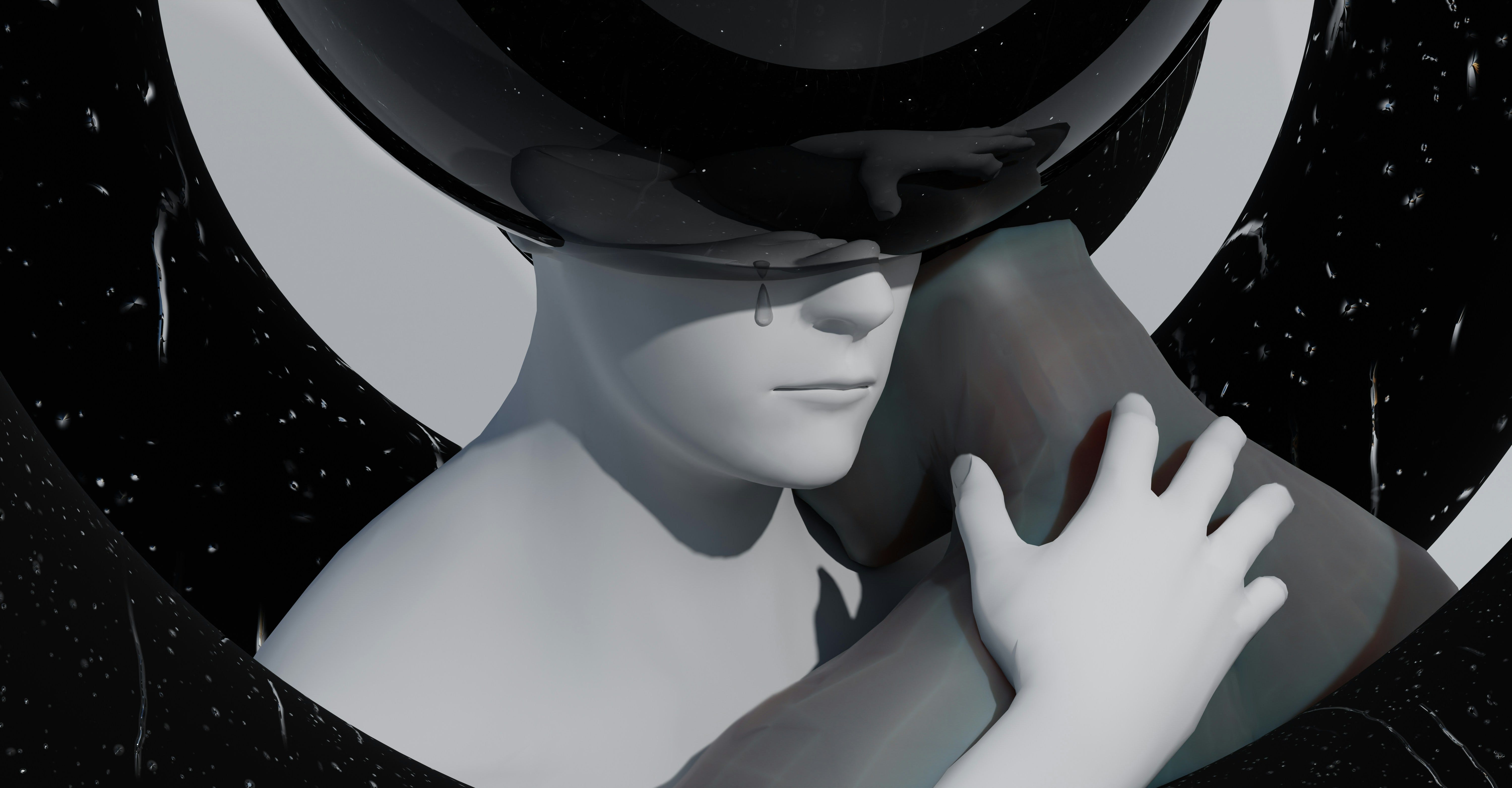
What I learned in that room has stayed with me for years.
What’s presenting in front of you is not always what’s actually in front of you.
The chart said back pain. Her body said something else entirely. The only reason I caught it was because I hadn’t fully committed to the obvious. Some part of me was still listening for the signal underneath the signal.
That gap, between what we think we’re seeing and what’s actually there, is where all the important information lives.
We experience life as a constrained rendering: useful, actionable, and inevitably incomplete. We take in a fraction of the available signals, filter them through our assumptions, and construct a story we call “reality.” Then we get offended when that story turns out to be wrong. We do this with patients. We do this with data. We do this with each other, every single day.
This is the doorway into Bayesian Zen.
Bayesian Zen is the discipline of living inside uncertainty without lying to yourself. It’s holding a working model of the world, updating it when reality contradicts you, and still acting with moral and practical seriousness, without the emotional theatrics of certainty.
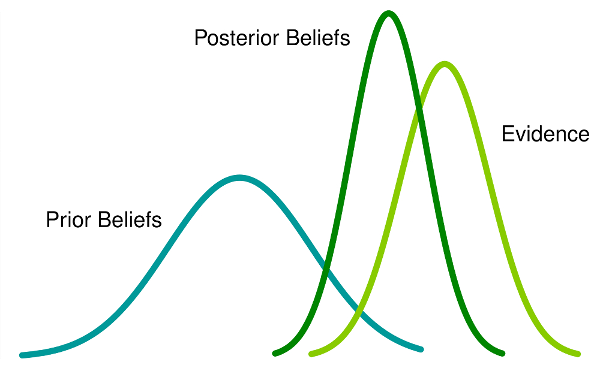
The key move is simple but psychologically brutal: you admit you always start with a point of view. You bring assumptions, history, base rates, temperament, scars, training, and desires into every judgment. That starting stance is not a flaw. It’s a constraint. It defines the shapes your thinking can take. The problem isn’t having a prior. The problem is mistaking your prior for a fact.
Then comes evidence. New data arrives. An unexpected test result. A market shock. A diagnosis. A flicker in someone’s eyes. Bayesian thinking says your beliefs should move in proportion to how strongly that evidence fits one explanation versus another.
You don’t update because you feel like it. You update because reality has spoken.
Credit/Source: BBC Ideas
The emotional life of humans hates this arrangement. The mind wants permanence. It wants a story with clean edges. It wants to file the chart, close the visit, and move on. But the most important thing in that room was the thing that didn’t fit the chart. Bayesian Zen is the practiced willingness to say “this is my best model right now” while keeping one ear open for the signal underneath the signal.
The modern world makes this harder, not easier. We receive a flood of inputs: statistics, narratives, influencers, ideologies, feeds engineered to provoke certainty rather than accuracy. False confidence is a drug with excellent marketing. It feels good, spreads fast, and makes people sound like leaders. But it makes them brittle. They can’t update without cracking, so they defend the wrong diagnosis long after the evidence has stopped supporting it.
Bayesian Zen creates a different strength: the strength to revise.
The mature question is never “how do I eliminate uncertainty?” That’s childish, even when adults ask it. The mature question is: “how do I build enough intellectual honesty to navigate uncertainty without letting my fear harden into a fixed belief?”
In medicine, this is the difference between treating every symptom as a verdict and calmly holding it as a hypothesis. You can take suffering seriously without treating your first interpretation of it as gospel.
In science, it’s the refusal to marry your hypothesis. Your convictions are conditional, because reality is the only authority that doesn’t care about your résumé.
In everyday life: you commit, but you don’t cling. You plan, but you don’t confuse your plan with fate. And you learn to treat “I don’t know” not as weakness, but as a precise and honest signal. Uncertainty is high. Seek better evidence. Widen the frame.
When In Doubt, Choose Benevolence

But here is where it gets bigger than medicine, bigger than science, bigger than any single discipline.
That woman walked into my office, and I almost missed her. I almost treated the chart instead of the person. And the only thing that saved the moment was a willingness to hold my assumption loosely enough that a single flicker could move me.
We do this with everyone. We see a colleague’s brief reply and decide they’re dismissive. We see a stranger’s expression and decide we know their story. We construct a complete human being out of a handful of signals and then treat our construction as the truth. We diagnose people the way I almost diagnosed that patient: quickly, confidently, and incompletely.
The antidote is not skepticism about everything. It’s something more specific and more generous than that.
When you don’t have complete information about another person, and you never do, the wisest move is the charitable assumption. Not because people always deserve it. Because you are always working with a partial chart. The signal underneath the signal is almost always more human, more frightened, and more complicated than the presenting complaint.
She came in with back pain.
She needed someone to notice she was carrying something heavier than that.
So does almost everyone.
I relate to Thomas Bayes. It’s hard to believe his statistics brilliance go back 300 years. Joanna’s does not throw up spelling errors in auto correct. That’s a claim to fame. Bayesian medicine is fundamentally different to algorithmic pathways that say yes/no… safety that we’ve followed the correct path. Algorithms. From the 1200 years ago. Certainty is the enemy of good medical practice and yet, the patient wants to trust the definitive ‘here’s what it is’ or ‘here’s what we’re going to do’. It’s hard to be a Bayesian brain and that Zen is magic when you get there.